Space Travel Makes Us Children Again
The Internet's favorite astrophysicist talks about saving NASA, putting a person on Mars, and why he thinks every tweet is "tasty."
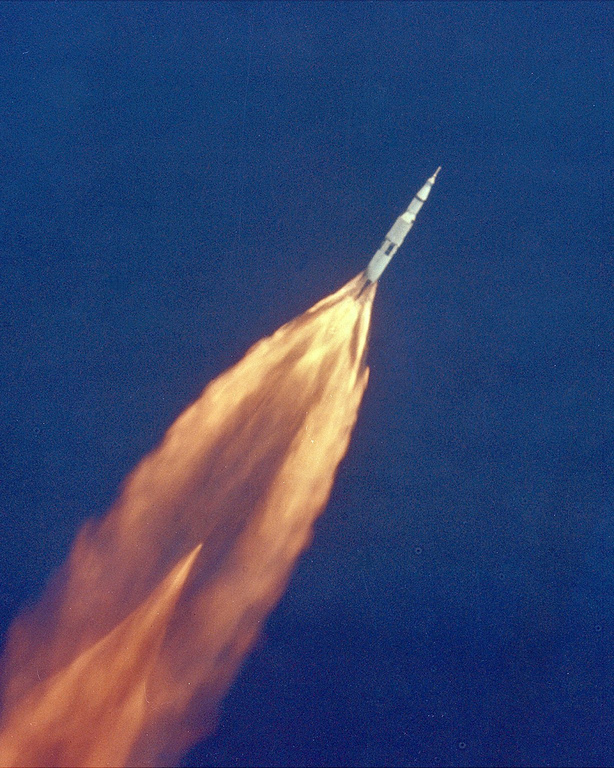
Neil deGrasse Tyson is not pleased with the plight of NASA. After the agency's decades-old space shuttle programme was shuttered last year -- ending the kind of depression-Earth orbit exploration that the astrophysicist and Hayden Planetarium manager jokes "boldly went where man had gone hundreds of times before" -- Tyson believes America is at a disquisitional moment for future space exploration.
Maybe that's why he originally wanted to telephone call his new book Failure to Launch: The Dreams and Delusions of Space Enthusiasts. (Later on publishers aghast at the depressing title, information technology was renamed Space Chronicles: Facing the Ultimate Frontier.) Over the last few decades, Tyson writes, Americans deluded themselves into believing misconceptions almost space travel, and, as a consequence, the purpose and necessities of a space plan are now misunderstood.
Give NASA the money it needs, he argues, and the bureau will stimulate the economy and inspire students to pursue innovative, ambitious projects. (Say, for example, a fashion to thwart a wayward asteroid that could threaten to wipe out humanity.) Continue to fund NASA at its current rate -- a shade more than $eighteen.seven billion in 2011, or equally Tyson oftentimes reminds, six-tenths of a percent of the federal budget -- and the country volition lose an ongoing infinite race to the Chinese and European space agencies of the world.
In a conversation last week, I asked Tyson nigh American marvel toward space, what needs to exist done to save NASA, and how he'south been able to brand scientific discipline accessible to the general public.
Space Chronicles focuses on the future of infinite exploration and America'due south interest in it. What practice you recollect inspires children and students to desire to learn about science and technology?
What I have found is that people who actually need the science education are the adults. Adults outnumber children. They're in charge. They wield resources. They vote. All of the things that shape the lodge in which we live are conducted by adults.
Kids are born curious well-nigh the globe. What adults primarily do in the presence of kids is unwittingly thwart the curiosity of children. Let's say, for example, a kid wants to jump into a muddy pool. What does the parent say? "No, don't do that. You'll get your clothing dirty." Well, that's how craters are formed on the Moon! This experiment has now been halted on the premise that it would get something dirty, when it otherwise it would've been a science experiment with interesting, illuminating consequences.
The claiming has never been children. The claiming has been adults. I don't think you have to exercise anything special to get kids interested in science, other than to get out of their way when they're expressing that curiosity.
All the adults are saying, "We need to amend scientific discipline in the world. Let's train the kids." I've never heard an adult say, "We need more than science in the world. Railroad train me." I've never heard an adult say that. Information technology'southward the adults that demand the science literacy, the kind of literacy that tin can transform the nation practically overnight.
In your volume, though, you mention the difficulties of keeping students interested in science -- that information technology doesn't work to stand in front of a high schoolhouse course and ask, "Who wants to pattern a vehicle that'southward 20 per centum more fuel-efficient than they ane your parents built?" If that's the example, what needs to be done to concenter their curiosity?
While all kids are scientists, they reach a point, a criterion, when puberty sets in and social life starts getting complicated. Then it'south time to consider how their interests will manifest through the transition. At that point, I would step in and offering an ambitious goal for them to achieve for, so that while they're continuing (or initiating) their studies of scientific discipline, they know they have a place to country when they get out of the pipeline.
Yous're correct. If I say, "Design me a airplane that'southward more than fuel-efficient, considering the country needs that at present," you're not going to get whatsoever truly transformative, innovative solutions. Instead, if I say, "Who wants to build an air foil that'll navigate the rarified atmosphere of Mars?" or "Nosotros're almost to go to Mars. Who wants to study life forms that are yet to be understood that we may discover?" I'm going to go the best engineers, I'g going to get the best biologists. I'm going to get the best of those categories because it's a goal befitting the depth of ambitions of students.
You lot've made yourself incredibly open to the full general public - on Reddit, Twitter, through email, and your podcast, Star Talk. What have those interactions revealed to you nigh adults' marvel towards space?
More ON SPACE

Thanks for asking that question. Not anybody puts it together that style - there are many unlike dimensions of reaching the public, peculiarly with the many media today, social media in particular, which bundle what audience you might accomplish from one medium to some other.
For me, the most fascinating interface is Twitter. I have odd catholic thoughts every solar day and I realized I could hold them to myself or share them with people who might be interested. These are thoughts that are unique to the perspective of someone who is an educator and is scientifically literate. For people who are not ane or both of those, these observations become intriguing.
I remember in one case, but reflecting when I was driving down the street afterwards I saw a streetlight, "When that turns cherry, I stop. Simply suppose our claret was based on copper instead of fe? It would be light-green instead of ruby, so green would be a color of warning. What would terminate lights look like if we had green claret?" I put that out there and information technology was heavily forwarded, heavily re-tweeted. People savor thinking along with me with these thoughts.

Is that why you included "space tweets" in your book?
Yes! I couldn't let these tweets go uncaptured for this book. I tried to care for them similar footling biscuits -- yous earned your way to that point in the book, so have a fiddling tasty biscuit. All tweets are tasty. Any tweet anybody writes is tasty. So, I endeavour to accept each tweet not but be informative, but have some outlook, some perspective that y'all might not otherwise had.
I always effort to get people a different outlook. When you do that, people take ownership of the information. They don't ever have to reference me because, I'd like to believe as an educator, I'm empowering them to have those thoughts themselves. When a person has those thoughts themselves, the comprehend the information, they take ownership of it, and it becomes relevant to their lives. That's why in every tweet, I try to put in something people desire to capture and keep. Otherwise, people volition say, "That'due south true considering Tyson said it." If that'due south how y'all're getting through your argument, I'g failing as an educator.
You lot write that space exploration is a "necessity." Why do you think others don't concur?
I don't recall they've thought it through. Most people who don't agree say, "We take problems here on World. Permit's focus on them." Well, we are focusing on them. The budget of social programs in the federal revenue enhancement base is l times greater for social programs than it is for NASA. Nosotros're already focused in means that many people who are NASA naysayers would rather information technology become. NASA is getting half a penny on a dollar -- I'chiliad saying permit's double it. A penny on a dollar would be enough to have a existent Mars mission in the near future.
Can the United states catch up in the 21st-century space race?
When everyone agrees to a single solution and a unmarried programme, there's zippo more efficient in the earth than an efficient commonwealth. Just unfortunately the opposite is besides true, there's naught less efficient in the world than an inefficient republic. That's when dictatorships and other sort of autocratic societies can pass you past while you lot're bickering over one thing or another.
But, I can tell you lot that when everything aligns, this is a nation where people are inventing the future every day. And that future is brought to you past scientists, engineers, and technologists. That'southward how I've ever viewed it. One time people understand that, I don't see why they wouldn't say, "Certain, let's double NASA's budget to an entire penny on a dollar! And by the way, here's my other 25 pennies for social programs." I think it's possible and I think information technology can happen, simply people demand to stop thinking that NASA is some kind of luxury project that can be done on dispensable income that we happen to have left over. That'south similar letting your seed corn rot in the storage bowl.
So, is NASA's current funding situation not plenty?
President Obama says we're going back to Mars, that we'll become there sometimes in the 2030s. Is he going to oversee that? No, it'south a president to be named later. On what budget? On a upkeep acquired past a president to exist named afterward. This is not an adventurous statement to make. It'due south a pretty condom comment for a politician to brand, and I was disappointed in that.
The problem is that many people operate on the assumption that NASA should go to Congress every year with hat in hand and justify it every year. Well, I see it as the greatest economic driver that in that location e'er was. Economic drivers don't need justification.
Of the drivers you lot mention in Space Chronicles that increase NASA funding -- war and economic interests -- which practise you think is more likely to be adopted by politicians in the coming decades?
No one wants to dice, and no one wants to dice poor. These are the two fundamental truths that transcend culture, they transcend politics, they transcend economic cycles. So, one time you recognize that a healthy moving borderland in space stimulates the kind of mindset that fosters innovations in science and engineering, and so you'll realize that of course we need to go in space considering that's just the kind of order you lot'll want to alive in.
While war is always the easiest solution to anybody'due south funding problem, y'all don't want state of war to be the modernistic 24-hour interval driver of space -- even though that'due south what got u.s.a. to the moon, in spite of our memory cleansing that into "We're Americans, nosotros're explorers, we're discoverers, that'southward why nosotros went to the moon." So going forward, the economic argument is a strong i, but it'due south non a simple "A goes to B". Information technology's not "We need more than innovation, so let'south fund innovation companies."
My favorite quote, I think it was Antoine Saint-Exupery who said, "If y'all want to teach someone to sail, you lot don't train them how to build a boat. You compel them to long for the open up seas." That longing drives our urge to innovate, and space exploration has the power to practise that, specially when it's a moving borderland because all traditional sciences are there. And so y'all'll become the best students, they'll take a place to land, and you'll modify the attitude that our culture has to the office of scientific discipline, engineering, technology, and math on our future.
To make any time to come that we dreamt up real requires creative scientists, engineers, and technologists to make information technology happen. If people are not inside your midst who dream nearly tomorrow -- with the capacity to bring tomorrow into the nowadays -- then the country might also simply recede back into the cavern considering that'southward where we're headed.
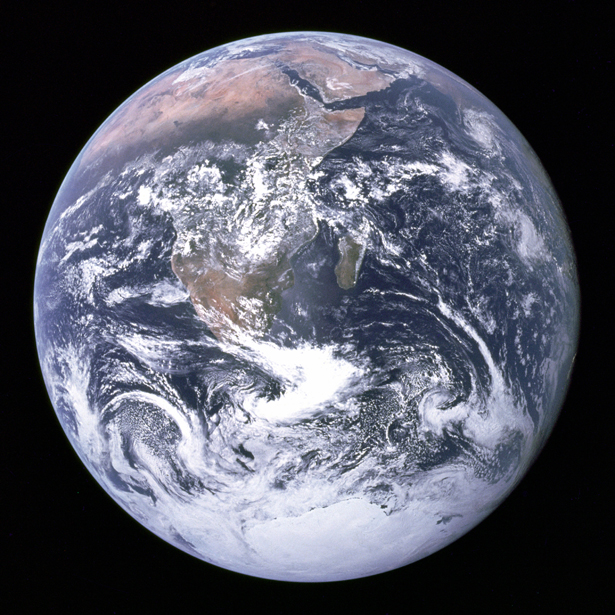
Images: NASA.
Source: https://www.theatlantic.com/technology/archive/2012/03/neil-degrasse-tyson-how-space-exploration-can-make-america-great-again/253989/
0 Response to "Space Travel Makes Us Children Again"
Post a Comment